
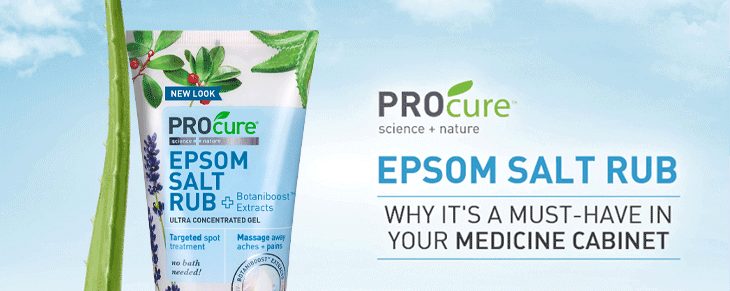
Epsom salt has earned its place in the wellness hall of fame for a reason. For decades, people have turned to it after long days, tough workouts, and sore mornings that seem to come out of nowhere. Traditionally, it shows up in one form: the bath. You pour, you soak, you wait—and eventually you climb out feeling like you got a reset.
But real life doesn’t always leave room for a full soak.
That’s where an Epsom salt rub becomes the smartest upgrade you can keep on hand. It brings the same “Epsom salt relief” mindset into a form that’s fast, targeted, and practical—something you can use when you need it, exactly where you need it, without planning your day around a tub.
The problem with relying on the bath
A bath is great when you have time, but it’s not always the most functional option. If your shoulders are tight from working at a computer all day, or your calves are angry after a long walk, you don’t necessarily need full-body treatment—you need spot relief.
And that’s the real advantage of a rub. Instead of turning recovery into a whole event, you can treat the specific area that’s bothering you and move on. It’s the difference between “I’ll do something about this later” and “I can handle this now.”
Why a rub belongs in the medicine cabinet
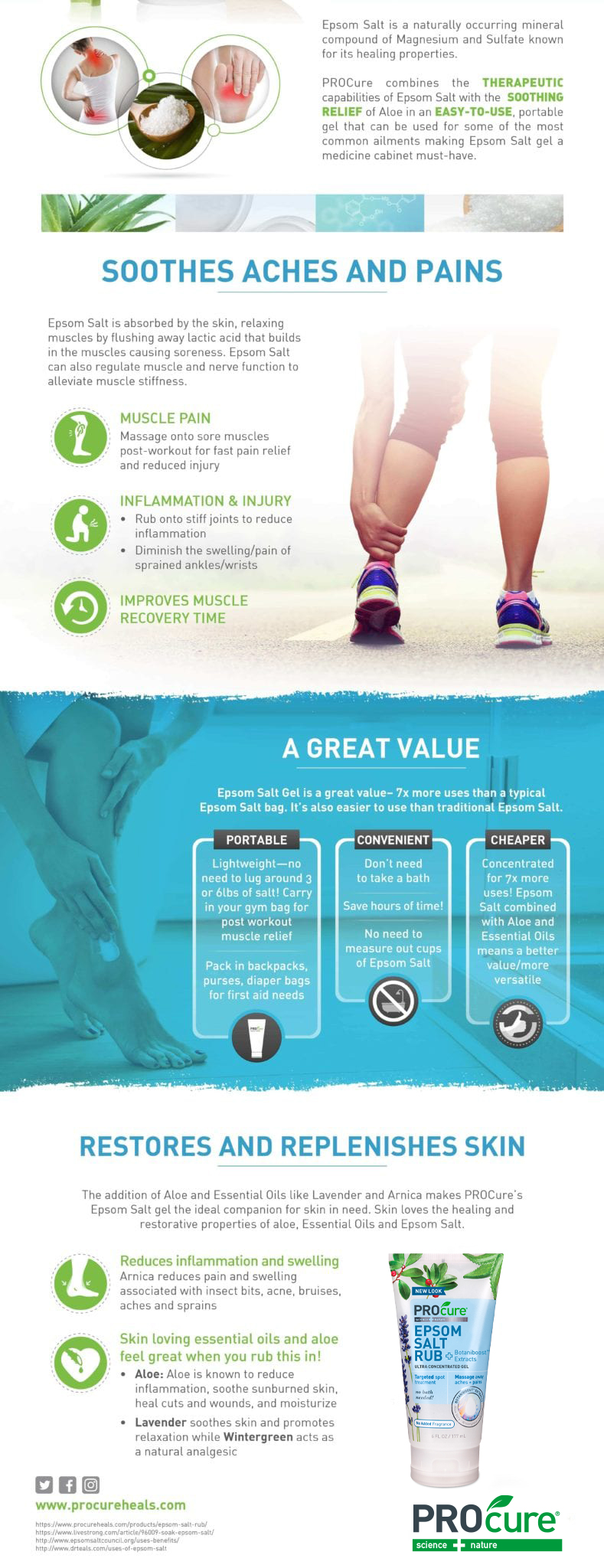
An Epsom salt rub is a simple concept: apply it directly to the area where you feel muscle tension, aches, soreness, or tightness, massage it in, and reapply as needed. It’s designed to be easy enough that you’ll actually use it—after workouts, before bed, or in that mid-afternoon moment when your neck reminds you you’ve been hunched over a laptop for six hours.
It also travels well. A bath can’t come with you, but a rub can. That makes it a great fit for gym bags, carry-ons, desk drawers, and “I’m going to regret this tomorrow” moments.
What makes it feel so soothing
A lot of rubs rely on a single sensation—either heat, cooling, or strong fragrance. An Epsom salt rub tends to feel more balanced because it pairs magnesium sulfate (Epsom salt) with skin-soothing and botanical ingredients.
In the case of ProCure’s Epsom Salt Rub, the formula includes Aloe Vera and a blend of botanicals and essential oils like wintergreen, arnica, lavender, tea tree, and black pepper oil. The result is a rub that’s meant to feel comforting on contact while you work it into the areas that feel overworked or stiff.
How to use it (and a tip that makes it even better)
Using it is straightforward: apply to the affected area and massage until fully absorbed. If you want a simple upgrade to the experience, follow with a warm compress. That little extra step can amplify the soothing effect—especially for stubborn tightness in the back, shoulders, or legs.
When you’ll be glad you have it
This is one of those “quiet essentials” that earns its keep over time. You’ll reach for it after a workout when your legs are heavy. You’ll use it after a long day on your feet. You’ll appreciate it when travel makes your body feel stiff and uncooperative. And you’ll definitely remember it on those days when you wake up thinking, “I slept wrong,” and your neck agrees.
It’s not glamorous. It’s just useful. And the most valuable things in a medicine cabinet usually are.
A quick note on common sense use
As with any topical product, use it externally, avoid eyes, and don’t apply it to broken or irritated skin. If you’re sensitive to essential oils or botanicals, a small patch test is a smart move before using it more broadly.
The bottom line
If you already believe in Epsom salt, a rub is the practical way to keep that relief within reach—without needing a bath, extra time, or extra effort. It’s targeted, easy, and ready whenever muscle soreness and tension show up.
If you’re building a medicine cabinet that’s actually built for real life, this is one of those items that makes sense to have before you need it.